CityTour AI

London self-guided walking tour

Spires, Stories, and the Silver Thames

Step into the living history of London on a walk that bridges the gap between medieval resilience and Victorian grandeur. You’ll wander through the hidden literary alleys of Fleet Street, stand in the shadow of St Paul’s iconic dome, and finish with a romantic stroll along the Thames. This route captures the city’s unique ability to reinvent itself while keeping its most charming secrets tucked away in plain sight.

Audio tourSelf-guidediOS & Android
182minutes
6.5 kmdistance
21stops
Audio guideFormat
Spires, Stories, and the Silver Thames
Johan Bakker / CC BY-SA 3.0

Stops on this route

This tour works well for first-time visitors, weekend trips, and travelers who want to explore London without a fixed tour time.
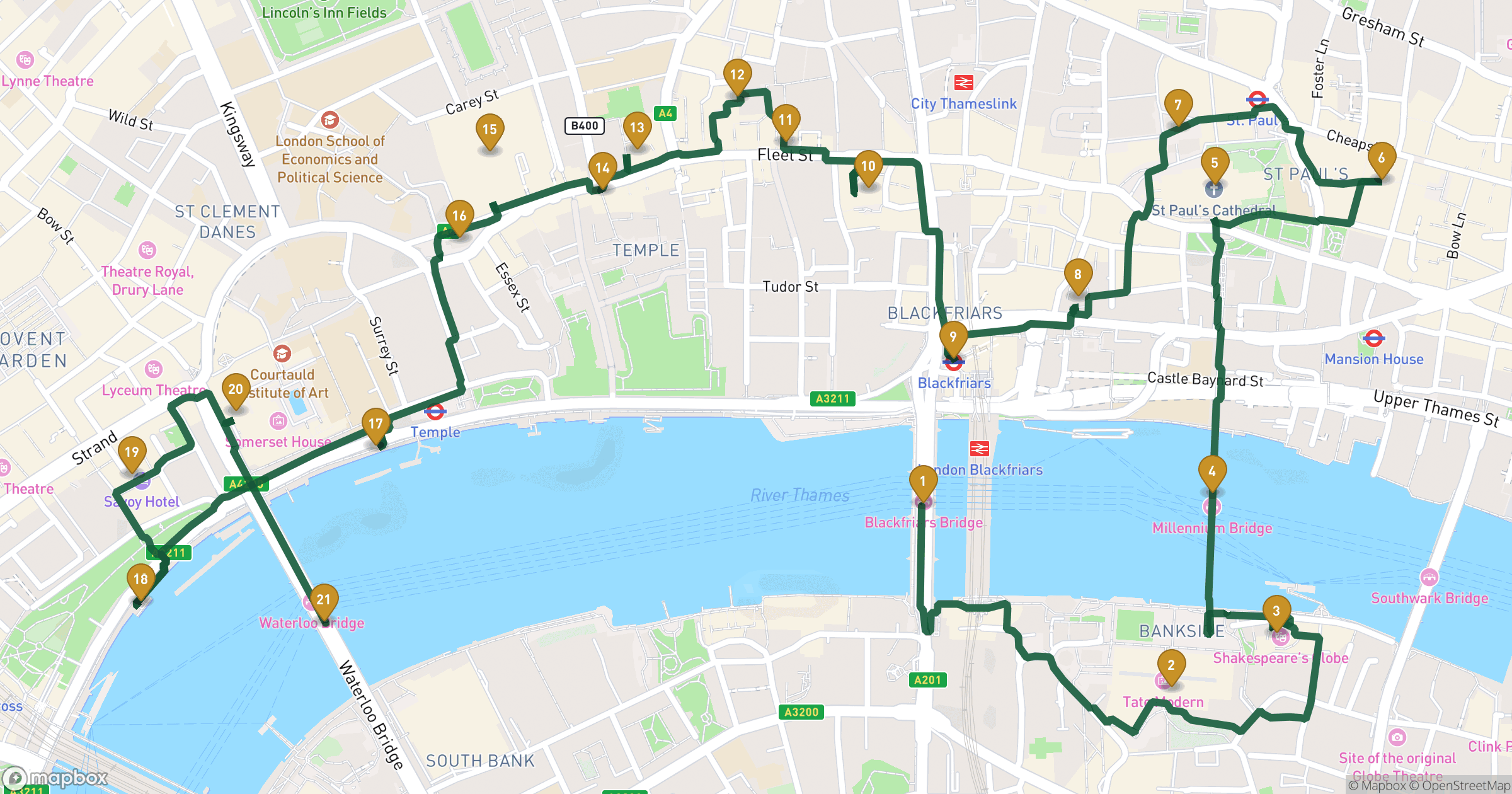
Route map for London walking tour

Map for London walking tour with 21 stops
The static map shows the tour route with Blackfriars Bridge, Tate Modern, Shakespeare's Globe, Millennium Bridge, and 17 more stops.

Stops along the route

All stops on this self-guided tour at a glance.

  1. Blackfriars Bridge in London
    mattbuck (category) / CC BY-SA 4.0

    1Blackfriars Bridge

    Blackfriars Bridge reveals layered crossings over the Thames and traces of the capital's lost waterways. Opened in 1869 by Queen Victoria, this iron structure replaced an 18th-century stone bridge named after William Pitt the Elder. In the water nearby stand isolated red pillars from a dismantled railway bridge, alongside a small opening discharging the underground River Fleet.

    Built: 1869 · Named after: Dominican Order · Wikidata

  2. Tate Modern in London
    Christine Matthews / CC BY-SA 2.0

    2Tate ModernTheatre

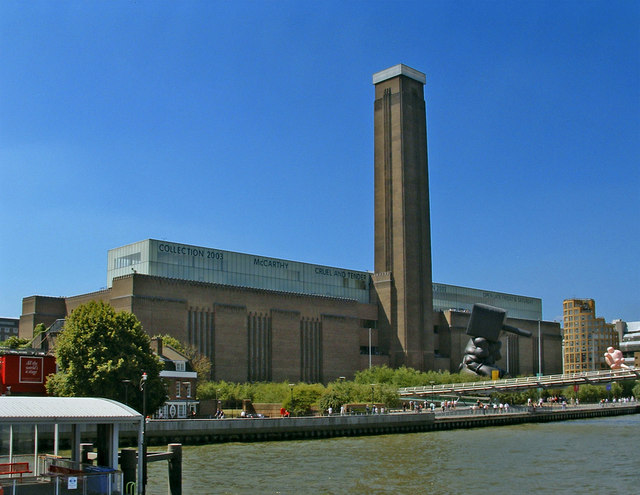
    Tate Modern occupies the colossal shell of the former Bankside Power Station. Sir Giles Gilbert Scott designed the central chimney to stand just under 100 meters, ensuring it remained shorter than St Paul’s Cathedral across the river. Following its closure in 1981, architects Herzog & de Meuron preserved the original framework, including the vast Turbine Hall.

    Built: 1992 · Architect: de Meuron · Named after: Sir Henry Tate · Wikidata

  3. Shakespeare's Globe in London
    Diego Delso / CC BY-SA 4.0

    3Shakespeare's GlobeTheatre

    Shakespeare's Globe faithfully reconstructs the 1599 playhouse that staged William Shakespeare’s premier works. The original timber structure burned down in under two hours in 1613 after a theatrical cannon ignited the thatch during a performance of Henry VIII. American actor Sam Wanamaker spearheaded the rebuilding using green oak, lime plaster mixed with goat hair, and water-reed thatch.

    Built: 1997 · Architect: Pentagram · Wikidata

  4. Millennium Bridge in London
    Public domain

    4Millennium Bridge

    The Millennium Bridge forms an ultra-minimalist pedestrian crossing between the Southbank and the City of London. Designed by Norman Foster and Anthony Caro, its suspension cables sit beneath the deck to frame an unobstructed view of St Paul's Cathedral. Soon after opening in 2000, engineers had to install 91 dampers to eliminate a severe rhythmic sway noticed on opening day.

    Built: 2000 · Architect: Norman Foster · Wikidata

  5. St Paul's Cathedral in London
    Mark Fosh / CC BY 2.0

    5St Paul's CathedralChurch

    St Paul's Cathedral stands as Sir Christopher Wren's English Baroque masterpiece, built to mark London’s rebirth following the Great Fire of 1666. Its 111-meter dome features a triple-shell structure, relying on an inner brick cone to hold up the heavy stone lantern. Wren became the first person buried in the crypt in 1723, beneath a Latin epitaph telling readers to look around.

    Built: 1675 · Architect: Christopher Wren · Style: English Baroque · Height: 111 m · Wikidata

  6. One New Change in London
    Eluveitie / CC BY-SA 3.0

    6One New ChangeMarket

    One New Change is a modern commercial complex set against the classic stonework of St Paul's Cathedral. Designed by Jean Nouvel and finished in 2010, the building earned the nickname 'the stealth bomber' for its dark, angular glass facade. Its glass panels specifically mirror the cathedral dome, and an open roof terrace accessed by glass lift offers near-level views across.

    Built: 2010 · Architect: Jean Nouvel · Wikidata

  7. Paternoster Square in London
    Txllxt TxllxT / CC BY-SA 4.0

    7Paternoster Square

    Paternoster Square blends modern corporate headquarters with architectural relocations. Its centrepiece is the Temple Bar Gate, designed by Sir Christopher Wren in 1669 as the ceremonial entrance from Westminster to the City of London. Removed in the 19th century to relieve road traffic, the stone gateway stood on a country estate for decades before being re-erected here in 2004.

    Named after: Paternoster Row · Wikidata

  8. St Andrew-by-the-Wardrobe in London
    Church of St Andrew by the Wardrobe by N Chadwick; N Chadwick; Geograph Britain and Ireland / CC BY-SA 2.0

    8St Andrew-by-the-WardrobeChurch

    St Andrew-by-the-Wardrobe owes its curious title to King Edward III's medieval wardrobe repository. In 1361, the king relocated his ceremonial robes, armour, and personal storehouse from the crowded Tower of London to this northern site. Rebuilt in red brick by Sir Christopher Wren in 1695, the restored church now serves as the London headquarters of the Coptic Orthodox Church.

    Built: 1685 · Architect: Christopher Wren · Style: English Baroque · Named after: Andrew the Apostle · Wikidata

  9. Blackfriars station in London
    Ewan-M / CC BY-SA 2.0

    9Blackfriars stationBuilding

    Blackfriars station is an engineering milestone serving as London's only railway depot spanning the entire width of the Thames. Originally opened in 1886 under the name St. Paul’s, it was renamed in 1937 to prevent confusion with the neighbouring Underground stop. A massive overhaul completed in 2012 fitted the platform roof with over 4,400 solar panels directly above the river.

    Wikidata

  10. St Bride's Church, City of London in London
    Johan Bakker / CC BY-SA 3.0

    10St Bride's Church, City of London

    St Bride's Church on Fleet Street inspired a global wedding tradition with its distinct tiered spire. An 18th-century baker's apprentice named Thomas Rich copied the stone tiers of Sir Christopher Wren's steeple to design the world's first tiered wedding cake. Having served as the spiritual home of the press since 1500, the church holds a special journalists' service every November.

    Built: 1670 · Architect: Christopher Wren · Style: English Baroque · Wikidata

  11. Ye Olde Cheshire Cheese in London
    Matt From London / CC BY 4.0

    11Ye Olde Cheshire CheeseMonument

    Ye Olde Cheshire Cheese is a historic Fleet Street pub rebuilt in 1667 immediately following the Great Fire. Descending into its stone-vaulted cellars brings visitors into the structural remains of a 13th-century Carmelite monastery. Charles Dickens frequented its dim rooms, later featuring the dark, wood-panelled interior as a setting in his novel A Tale of Two Cities.

    Wikidata

  12. Dr Johnson's House in London
    Spudgun67 / CC0

    12Dr Johnson's HouseMuseum

    Dr Johnson's House is Samuel Johnson's sole surviving London residence out of eighteen homes he once occupied. In this light-filled Georgian attic between 1748 and 1759, Johnson and six assistants defined over 40,000 words by hand for his monumental English dictionary. Saved from ruin in 1911 by politician Cecil Harmsworth, the building retains its original 18th-century pine staircase.

    Wikidata

  13. St Dunstan-in-the-West in London
    Elisa.rolle / CC BY-SA 3.0

    13St Dunstan-in-the-WestChurch

    St Dunstan-in-the-West is notable for its unusual octagonal nave designed by John Shaw in the 1830s. During the Great Fire of 1666, forty Westminster schoolboys formed a bucket brigade in the middle of the night, extinguishing the flames three doors away. Mounted on the facade is a 17th-century clock featuring two carved wooden giants striking bells on each quarter-hour.

    Built: 1830 · Architect: John Shaw · Style: Gothic Revival · Wikidata

  14. Prince Henry's Room in London
    Ricardalovesmonuments / CC BY-SA 4.0

    14Prince Henry's RoomMuseum

    Prince Henry's Room is a timber-framed survivor dating from 1610 that escaped the destruction of the Great Fire. Built originally as the Prince’s Arms tavern, it commemorated the investiture of King James I's son Henry as Prince of Wales. Inside, an ornate plaster ceiling displays the Prince of Wales's feathers and the letter P, alongside historical links to Samuel Pepys.

    Wikidata

  15. Royal Courts of Justice in London
    This image was produced by me, David Castor (user:dcastor). The pictures I submit to the Wikipedia Project are released to the public domain. This gives you the right to use them in any way you like, without any kind of notification. This said, I would still appreciate to be mentioned as the originator whenever you think it complies well with your use of the picture. A message to me about how it has been used would also be welcome. You are obviously not required to respond to these wishes of mine, just in a friendly manner encouraged to. (All my photos are placed in Category:Images by David Castor or a subcategory thereof.) / CC0

    15Royal Courts of JusticeAttraction

    The Royal Courts of Justice showcase imposing Victorian Gothic Revival architecture designed by George Edmund Street. Street died from exhaustion before the complex opened in 1882, having endured intense disputes and a stonemasons' strike that required hiring German workers. Over one million pounds for its construction came largely from unclaimed money left by people without a will.

    Built: 1882 · Architect: George Edmund Street · Style: Gothic Revival · Wikidata

  16. St Clement Danes in London
    Stephen Richards / CC BY-SA 2.0

    16St Clement DanesChurch

    St Clement Danes stands isolated as an island church in the centre of the Strand roadway. Sir Christopher Wren rebuilt the site in 1682, honouring a 9th-century Danish community that originally dedicated a sanctuary to the patron saint of mariners. Reconstructed in the 1950s after Blitz bomb damage, it now serves the Royal Air Force, paving its floor with Welsh squadron slates.

    Built: 1680 · Architect: Christopher Wren · Style: English Baroque · Named after: Clement · Wikidata

  17. Victoria Embankment in London
    Peter Trimming; From geograph.org.uk / CC BY-SA 2.0

    17Victoria EmbankmentBuilding

    Victoria Embankment transformed the polluted Thames riverfront into an integrated public works system. Built by engineer Joseph Bazalgette and opened in 1870, it enclosed the Northern Low-Level Sewer to redirect waste from the river and end the Great Stink. The engineering project reclaimed 37 acres of river mud while incorporating underground tracks for the District Line.

    Architect: Joseph Bazalgette · Named after: Victoria · Wikidata

  18. Cleopatra's Needle in London
    Photograph by Mike Peel ( www.mikepeel.net ). / CC BY-SA 4.0

    18Cleopatra's NeedleMonument

    Cleopatra’s Needle is an ancient Egyptian obelisk quarried from red Aswan granite around 1450 BC. First erected in Heliopolis for Thutmose III, it was transported inside an iron cylinder that broke loose in the Bay of Biscay in 1877, killing six sailors. Flanking the monument are two bronze sphinxes positioned facing the needle, bearing scars from a World War I German bomb.

    Built: 1449 BC · Wikidata

  19. Savoy Hotel in London
    Photo by CVB, edited and cropped by Cart; File:Hôtel Savoy The Strand Londres.jpg / CC BY-SA 4.0

    19Savoy HotelBuilding

    The Savoy Hotel introduced groundbreaking luxury amenities to Victorian London upon opening in 1889. Theater impresario Richard D'Oyly Carte used profits from Gilbert and Sullivan operas to fund Britain's first hotel with electric lifts, electric lighting, and private bathrooms. Its driveway remains the only UK road legally requiring vehicles to drive on the right under an Act of Parliament.

    Built: 1889 · Architect: Thomas Edward Collcutt · Wikidata

  20. Somerset House in London
    Stephen Richards / CC BY-SA 2.0

    20Somerset HouseTheatre

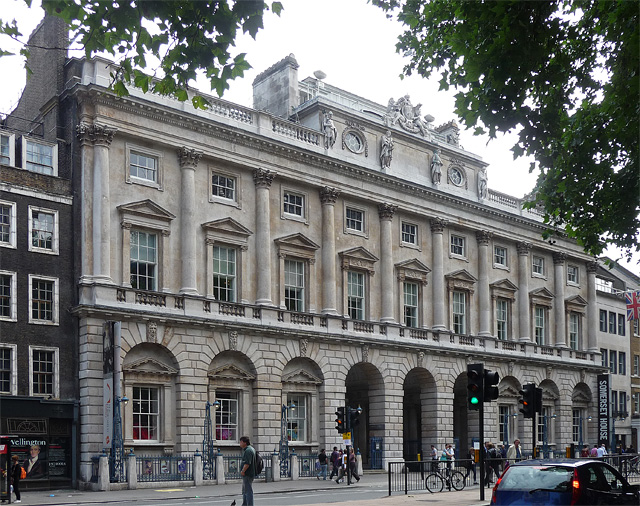
    Somerset House began as a grandiose Tudor palace established by Edward Seymour, Duke of Somerset. Seymour demolished surrounding churches and the cloisters of St Paul’s Cathedral for building materials before his 1552 execution for treason. Later redesigned by Sir William Chambers, its central courtyard now features the Edmond J. Safra Fountain Court with 55 choreographed jets.

    Architect: William Chambers · Style: Georgian architecture … · Wikidata

  21. Waterloo Bridge in London
    Photograph by Mike Peel ( www.mikepeel.net ). / CC BY-SA 4.0

    21Waterloo Bridge

    Waterloo Bridge earned the nickname 'the Ladies' Bridge' during its wartime construction in World War II. With most men away fighting, a predominantly female workforce erected the crossing, a feat formally commemorated by a plaque. Architect Sir Giles Gilbert Scott clad the structure in Portland stone, which uses calcium carbonate to react with rain and wash away city grime.

    Architect: Giles Gilbert Scott · Named after: Battle of Waterloo · Wikidata

Download the app

This public page shows a preview. The full route, all content, and navigation are available in CityTour AI.

Cities nearby

Discover self-guided tours in nearby cities.

Frequently asked questions

The key answers before you start.

Is this a self-guided audio tour?

Yes. In the CityTour AI app (iOS and Android), this is a self-guided audio tour for London — start anytime, at your own pace, with map, stops, and audio narration.

What will you see on this tour?

On this tour you'll see, among others, Blackfriars Bridge, Tate Modern, Shakespeare's Globe, Millennium Bridge, St Paul's Cathedral, One New Change and more sights.

Where does the tour start?

The route starts at Blackfriars Bridge and ends at Waterloo Bridge. You can start anytime — the app guides you to the first stop.

How long does the tour take?

About 182 minutes for 21 stops — at your own pace, with breaks whenever you like.

How much does the tour cost?

This tour costs 30 credits. The exact price depends on the pack you buy and your country — roughly $10.

Is it an outdoor tour — are entry tickets included?

Yes, it's an outdoor tour: the sights are viewed from the outside. Entry tickets are not included, and step-free access cannot be guaranteed.

Is the audio guide available in my language?

The tour and audio guide are available in English, Deutsch, Français, Español, Italiano and 9 more languages. You pick your language in the app.

Can I use the tour offline?

Yes. Tours can be used offline.

Can I ask the AI questions along the way?

Yes. At every stop you can ask the AI directly if you want to know more or didn't understand something.